Introduction

Alec Tzannes is a quintessential Sydney architect in his artful responsiveness to its sense of place, in never straying too far from his hometown, and in producing a body of work that intersects with and contributes to the evolution of the city over four decades in creative ways.

The development and diversification of his architecture into a compelling urban project has mirrored the city’s transformation since the 1970s from its premier position among Australian capital cities into a global metropolis. Driven by powerful economic, technological, cultural and environmental forces, that narrative is exemplified by a series of hotspots in which Tzannes has been directly involved.

These sites – from gentrifying inner suburbs through iconic spaces of the central city to attention-grabbing urban renewal precincts – have created opportunities for a new architecture and public realm responsive to the urban context. They have almost all invariably involved complex transactions negotiating topographic, heritage and planning constraints in sustainability, site and situation.

Tzannes, the architect and the firm, have risen and continue to rise to the challenges presented, creating a diverse, adaptive yet recognisable footprint across the city, most notably in and around its harbourside core.

P.47
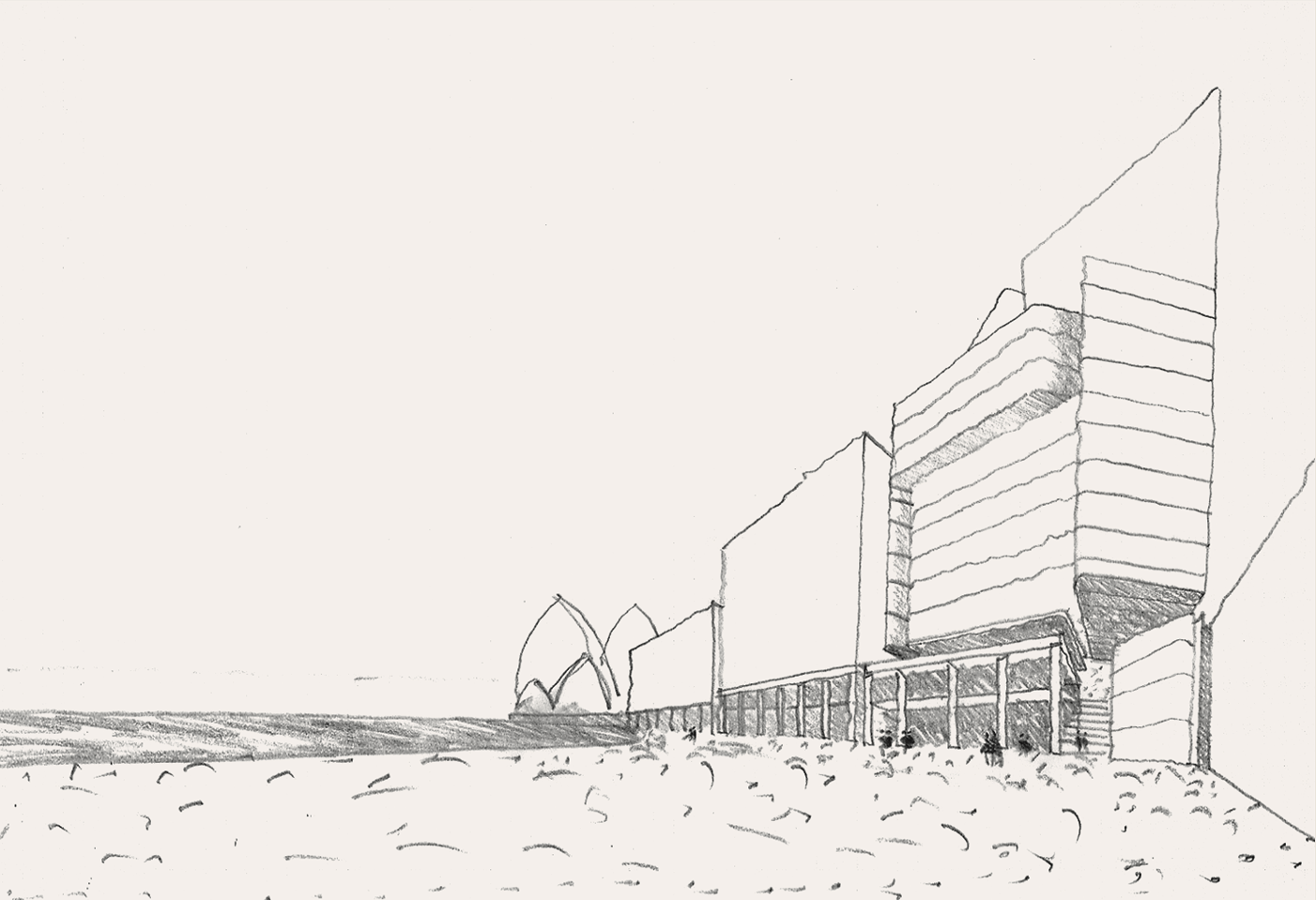
‘The Opera Residences’. Sketch by Alec Tzannes p.52

Conclusion

Tzannes’ oeuvre over nearly half a century derives from a research-informed, site and context sensitive, non-doctrinaire approach that is committed to design excellence and eschews dogmatic stylism.

The values forged early as a young architect have endured into later, more complex projects undertaken by the Tzannes practice. Arguably their more significant contributions have come in complex urban projects characterised by a raft of not always complementary controls enmeshed in tortuous approval processes.

‘It’s important for a design to engage with the community it is to serve,’ Alec says. It has to have compassion… my idea of architecture is…about making a beautiful building that can make its whole environment beautiful as well.’ Fellow architect Richard Johnson testifies to ongoing success in this regard: ‘He always produces marvellously well-considered work that’s beautifully crafted and fits into the context every time.’

More to the point, the wealth of Tzannes’ practice’s contributions in Sydney ‘across a complete range of diverse building types and urban masterplans [have] helped to build and shape the difficult metropolis.’

This essay has touched lightly on only a handful of these projects. There are so many other everyday Sydney spaces and places impacted: iconic pubs like the Paragon at Circular Quay and the Golden Sheaf Hotel at Double Bay, schools like Cranbrook and Ascham, university buildings at Parramatta and Kensington, Sydney Olympic Park, a Surry Hills carwash, street furniture for the City of Sydney, and on it goes as this book records.

Other architectural practices also have a sizable footprint, of course, but the distinctive Tzannes touch is a timeless respect for place through thoroughly contemporary yet historically contingent interventions.

The legacy is an artistic and responsible functionality that has added demonstrable value to Sydney’s urban environment.

P.55

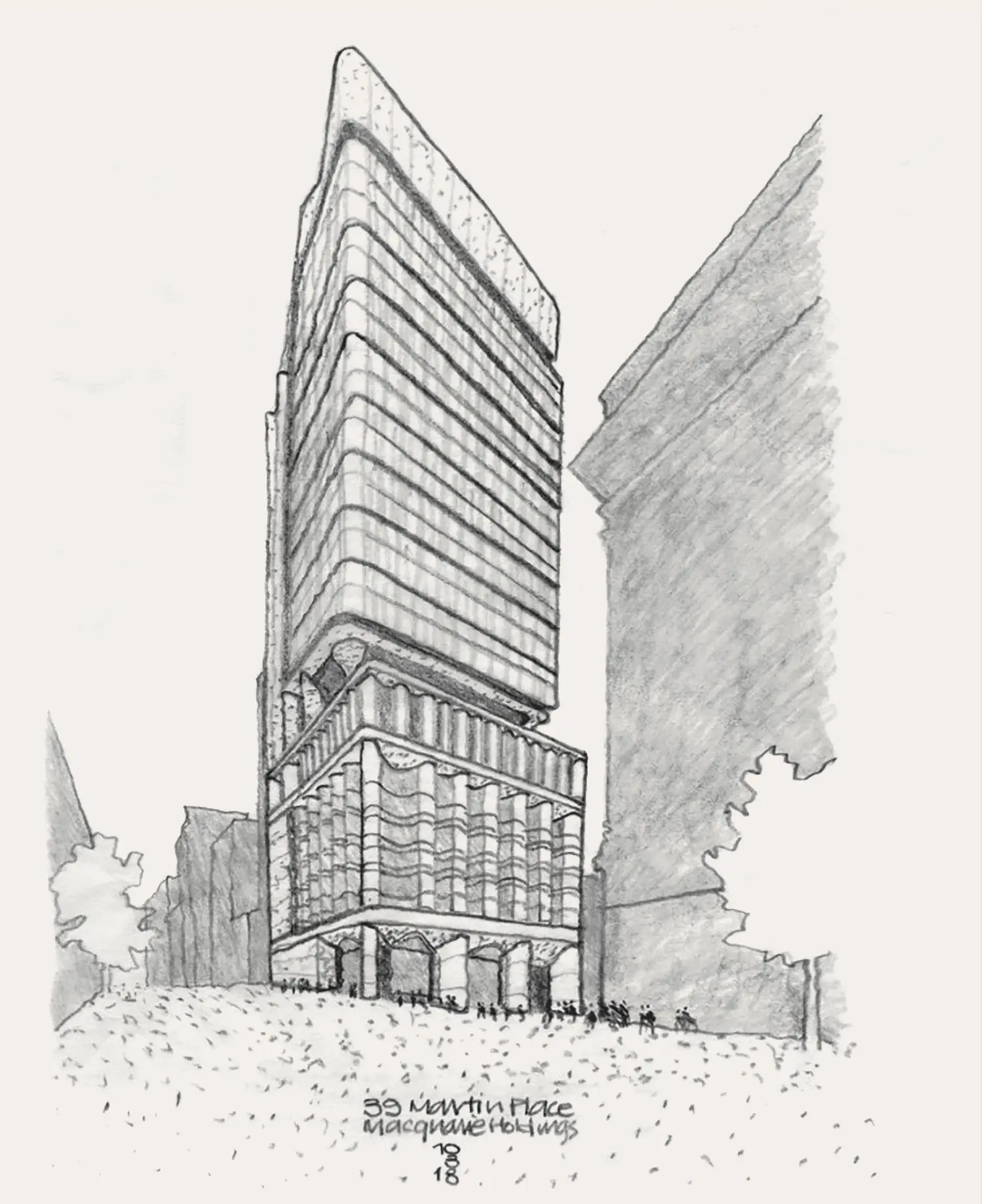
‘39 Martin Place’ 2018. Sketch by Alec Tzannes p.54

ABOUT THE AUTHOR:

Robert Freestone is a Professor of Planning in the School of Built Environment at UNSW. His main research interests are planning history, metropolitan planning, urban design, and heritage. He is a Fellow of the Academy of the Social Sciences of Australia, Australian Academy of Humanities, the Planning Institute of Australia and the Institute of Australian Geographers.

Excerpts from the essay Tzannes’ Sydney by Robert Freestone in the book:

Tzannes: Adaptive Urban Architecture and Design
Edited by Paola Favaro and Robert Freestone
Thames & Hudson, Australia, 2024
ISBN 978-1-760-76292-6

Available at: Tzannes | Thames & Hudson Australia

ABOUT THE BOOK:

Tzannes: Adaptive Urban Architecture and Design showcases over fifty housing, commercial, cultural, educational and institutional projects by Tzannes, accompanied by research essays that critically interpret the work of one of Australia’s leading design firms. Together, they form an insightful examination of a practice committed to urban architecture, responsive to the built, natural and First Nations environments.

The book includes the following essays:

  • Foreword by Peter Poulet
  • Introduction by editors Paola Favaro and Robert Freestone
  • Techne and Tectonic by Paola Favaro
  • Growing Up by Colin Bisset
  • Studying Architecture 1970-75 by Peter Kohane and Mark Stiles
  • Tzannes’ Sydney by Robert Freestone (featured above)
  • Town Houses by Nicola Pullan
  • Infill, Memory and the Henwood House by Sing D’Arcy
  • Holiday Houses by Paola Favaro
  • Major Houses by Paola Favaro
  • Syntaxes and Codes in Harbour Houses by Paola Favaro
  • Apartments by Paola Favaro
  • Newcastle Masterplan and Housing by Alanya Drummond
  • Timber Architecture by Nicola Pullan
  • Poetics and Performance by Philip Oldfield
  • Construction, Structure and Innovation by Luciana Cardelliccho
  • Competition Projects by Nicola Pullan, Paola Favaro and Robert Freestone
  • Street Furniture by Paola Favaro
  • The Fluid Scale of Design Practice by Oya Demibilek and Ainslie Murray
  • Education and Culture by Paola Favaro
  • Education, Memory and Community by Raffaele Pernice
  • Parkland Settings by Nicola Pullan and Robert Freestone
  • The Federation Pavilion by Andrew Andersons
  • Precincts, Heritage and Urban Design by Nicola Pullan and Robert Freestone
  • A New Kind of Cultural Building by Christina Garduno Freemen
  • Afterword by Amy Dowse (Director at Tzannes)