Circular Quay is Australia’s most significant and historic waterfront precinct. With a rich Indigenous and European heritage, it is one of the nation’s busiest tourist destinations. It is also a major transport interchange for Sydney’s CBD, connecting pedestrian, ferry, bus, rail, and light rail networks.
Tzannes was an integral member of the CQC Consortium awarded the NSW Government’s contract to renew Sydney’s Circular Quay in 2022. The Consortium was led by development partners Capella Capital, Lendlease Construction and BESIX Watpac, and included a design team comprising Tzannes, Aspect Studios and Weston Williamson Partners.
The brief identified several challenges impacting the experience of Circular Quay. These included deteriorating infrastructure; poor connectivity, wayfinding and overall amenity; and poor acknowledgement of First Nations cultural significance.
A Country-led approach
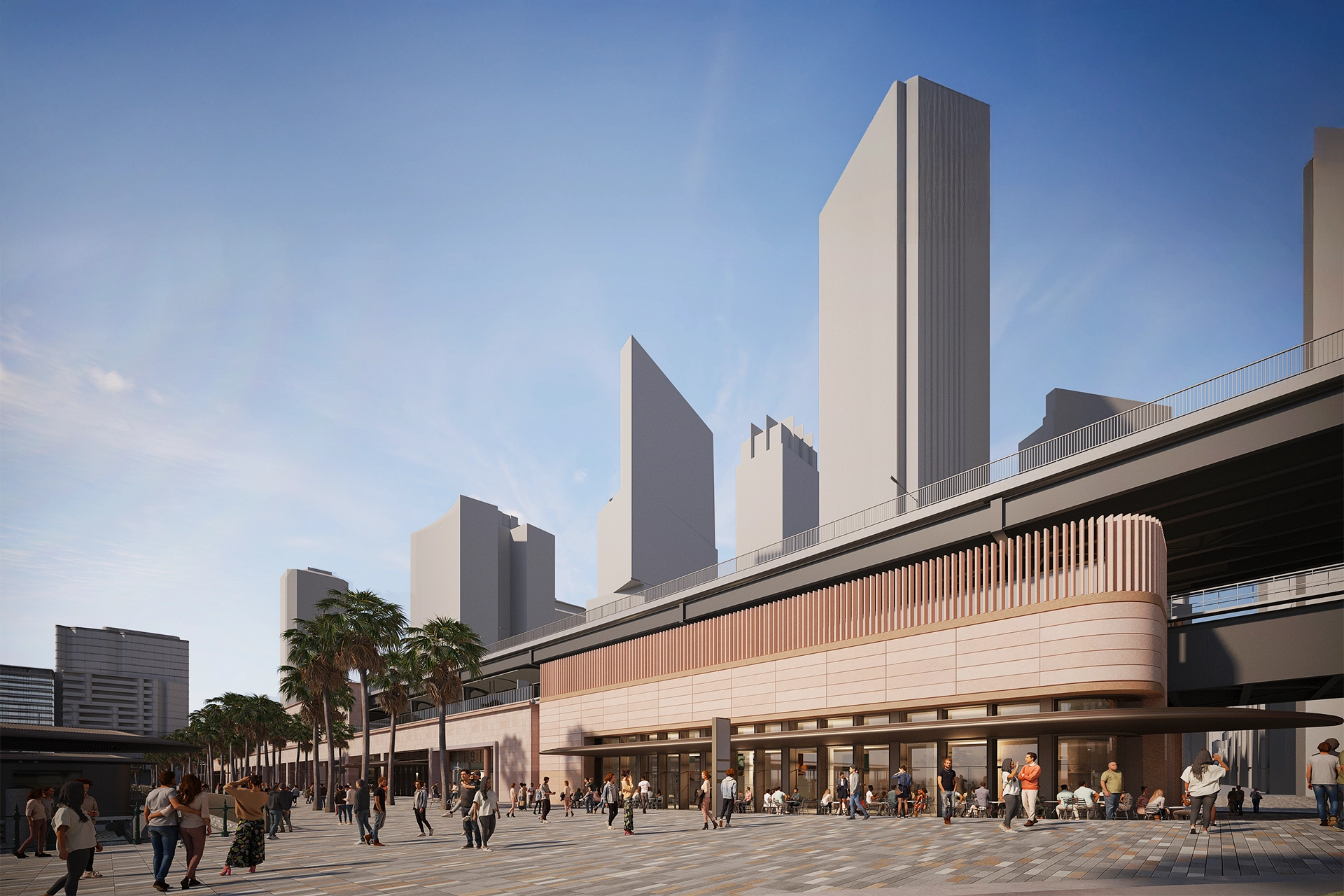
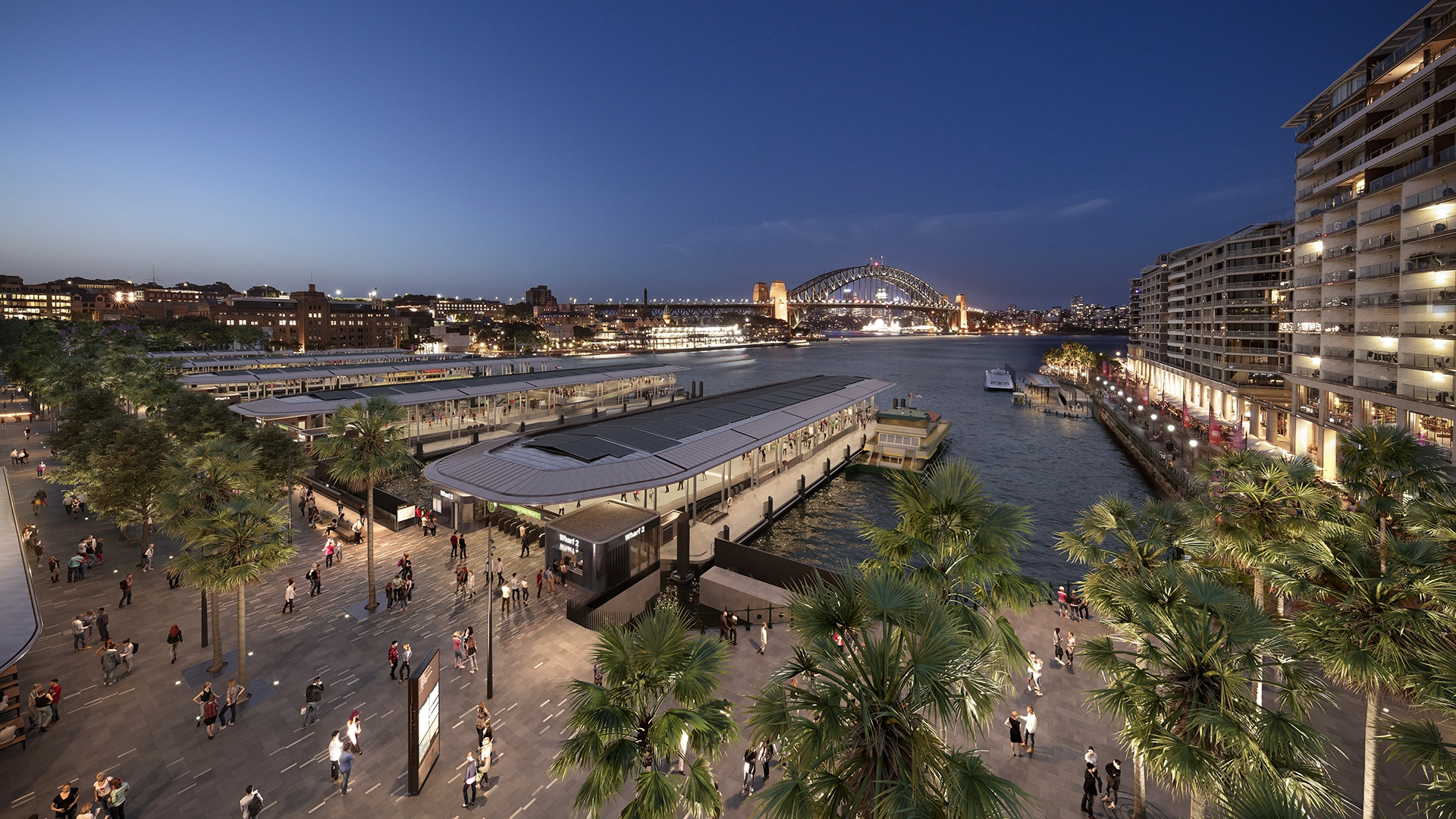
Collaborating on the precinct’s overarching urban design, Tzannes role focused on Circular Quay Station and wharves. The proposed design prioritises public experience, unifying the disjointed environment into a cohesive whole that celebrates the inherent beauty of Country.
Tzannes worked closely with First Nations colleagues in a co-design process to ensure that the proposed plan honours Warrane (the Indigenous name for Sydney Cove) and Gadigal Country, revealing the First Nations’ history of the site and respecting current cultural practices.
Decluttering, simplification and rationalisation
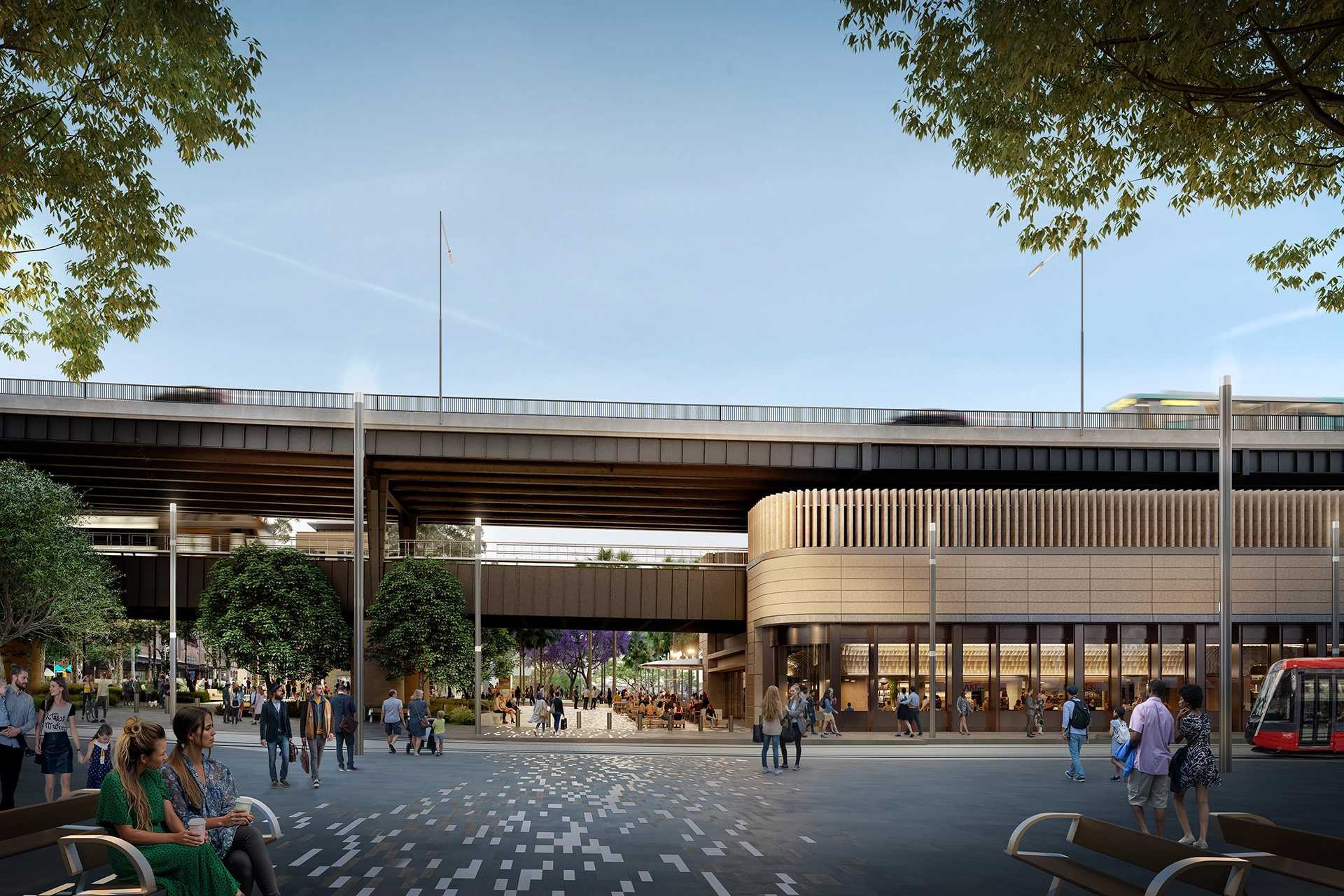
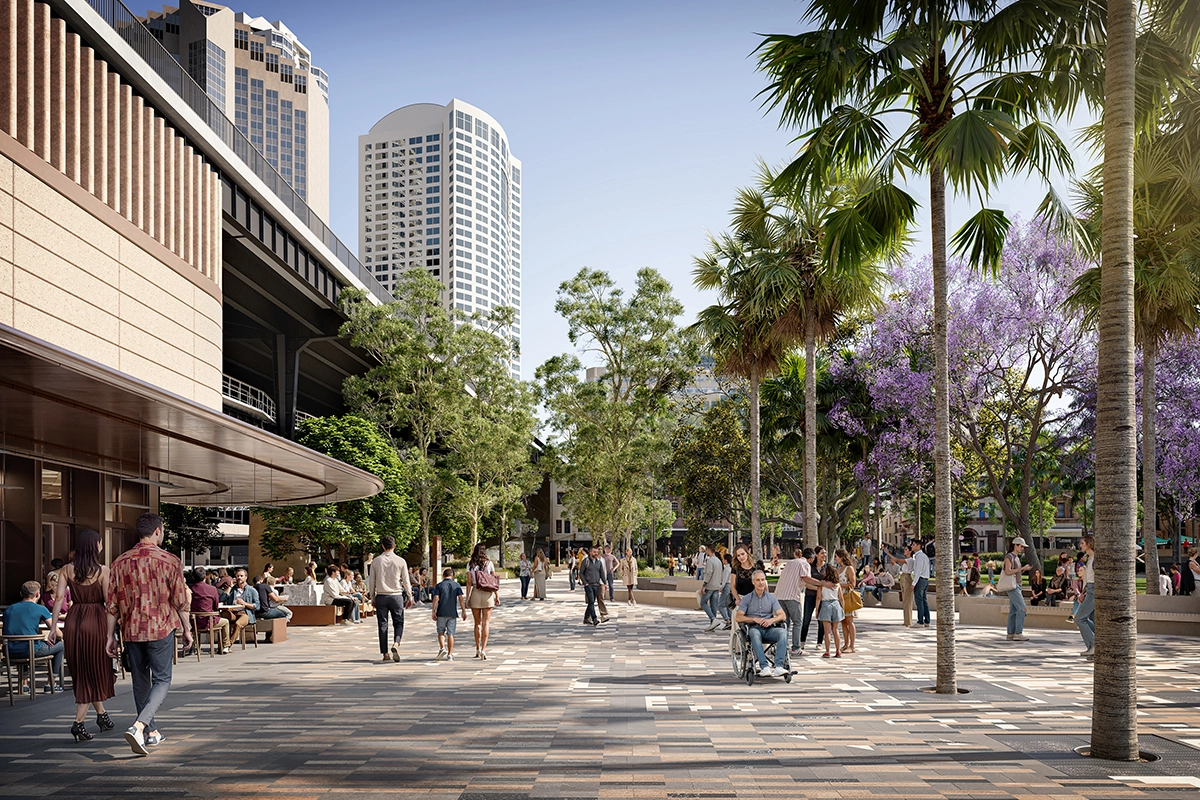
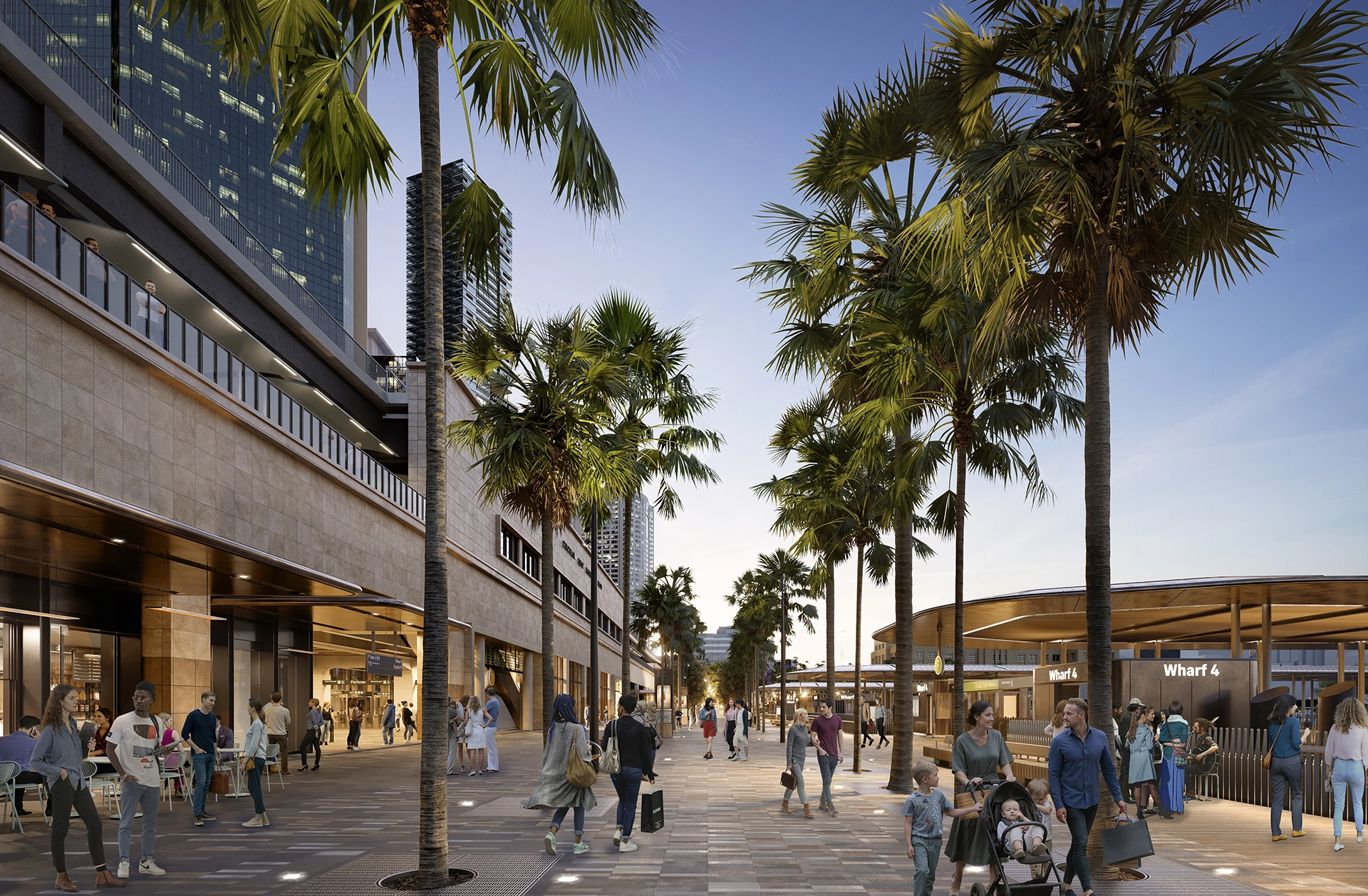
Tzannes’ proposal significantly widens the Quay’s southern promenade, reducing clutter and extending timber decking to the water’s edge. Connections in every direction are simplified and opened up to create uninterrupted pedestrian movement. More generous space will reduce crowding and encourage visitors to meander while enabling faster and more efficient movement between ferries and the city.
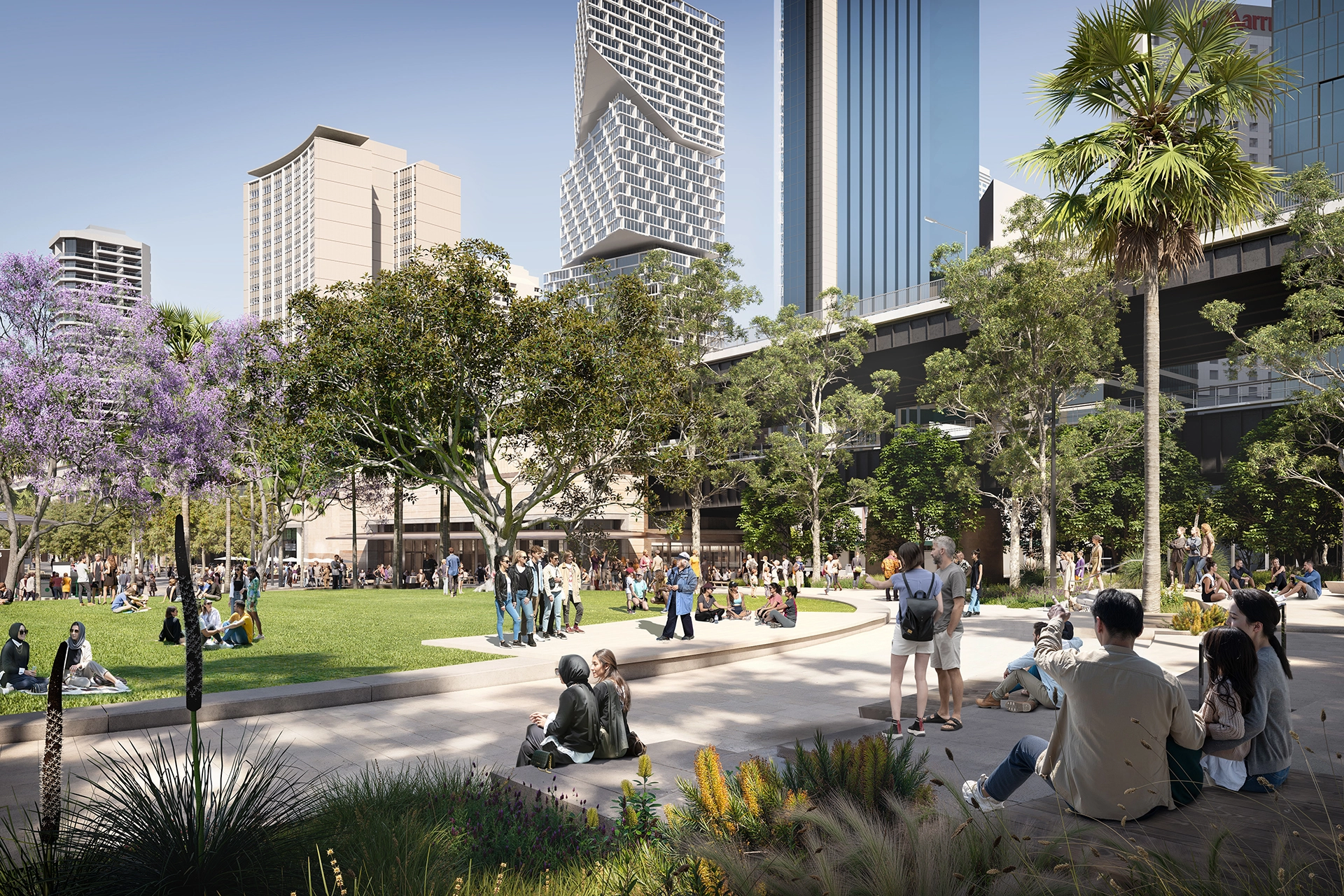
Day and night food and retail are set within structures that respect the setting and sit calmly and coherently within the context of Warrane. Opportunities to connect in both transactional and non-transactional environments ensure that all visitors feel welcome. The appeal of the space is enhanced by trees that add green along the length of the promenade and provide shade.
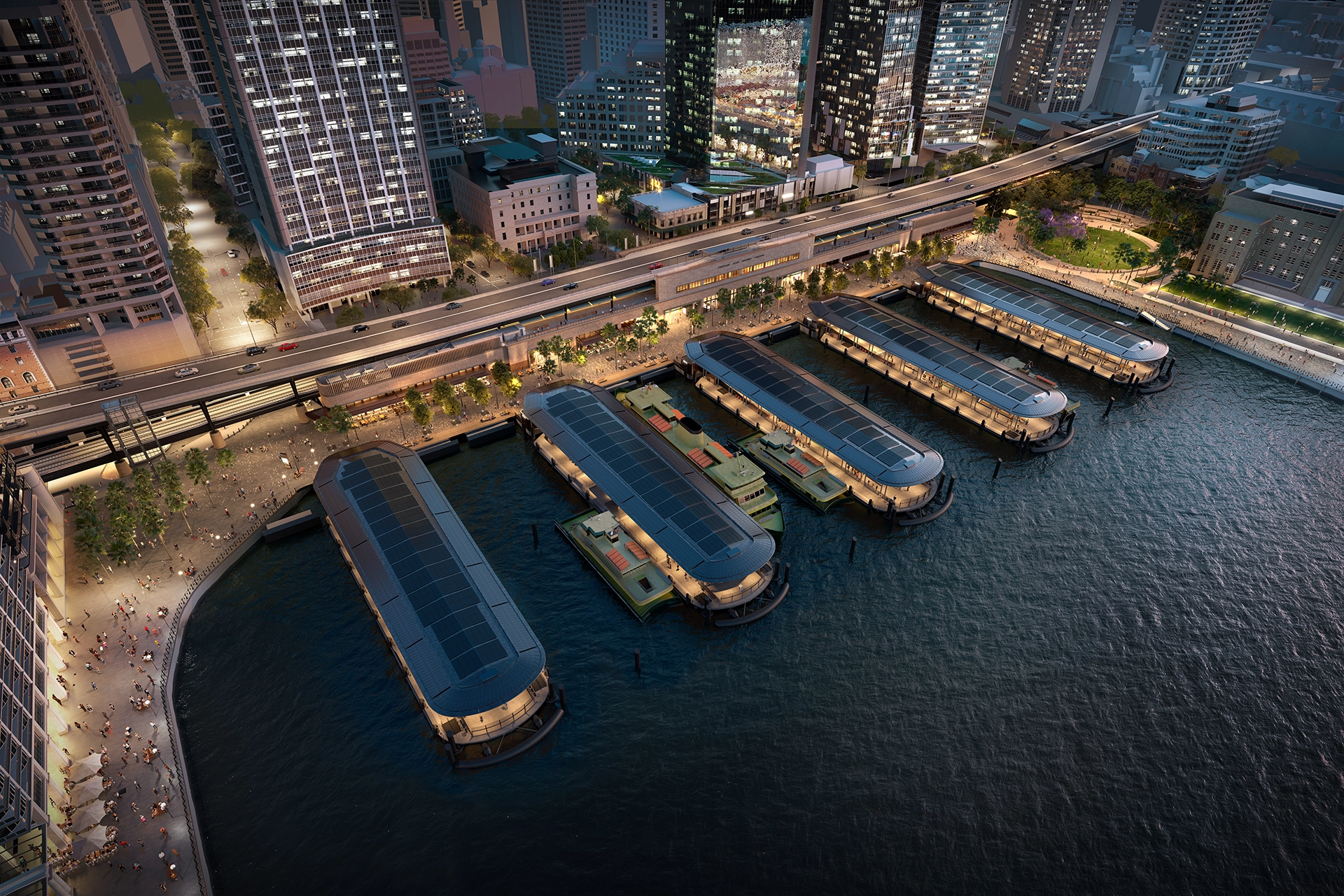
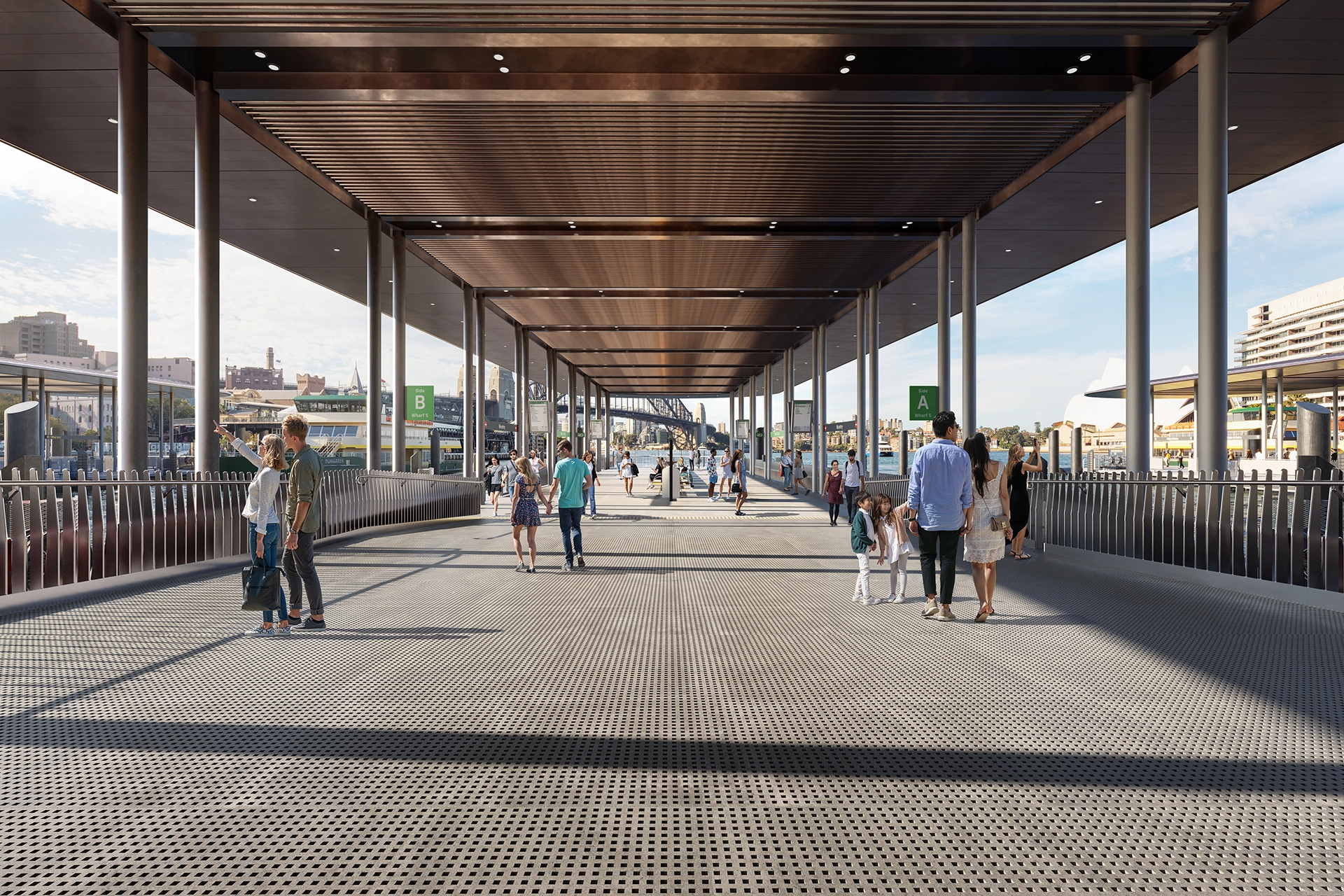
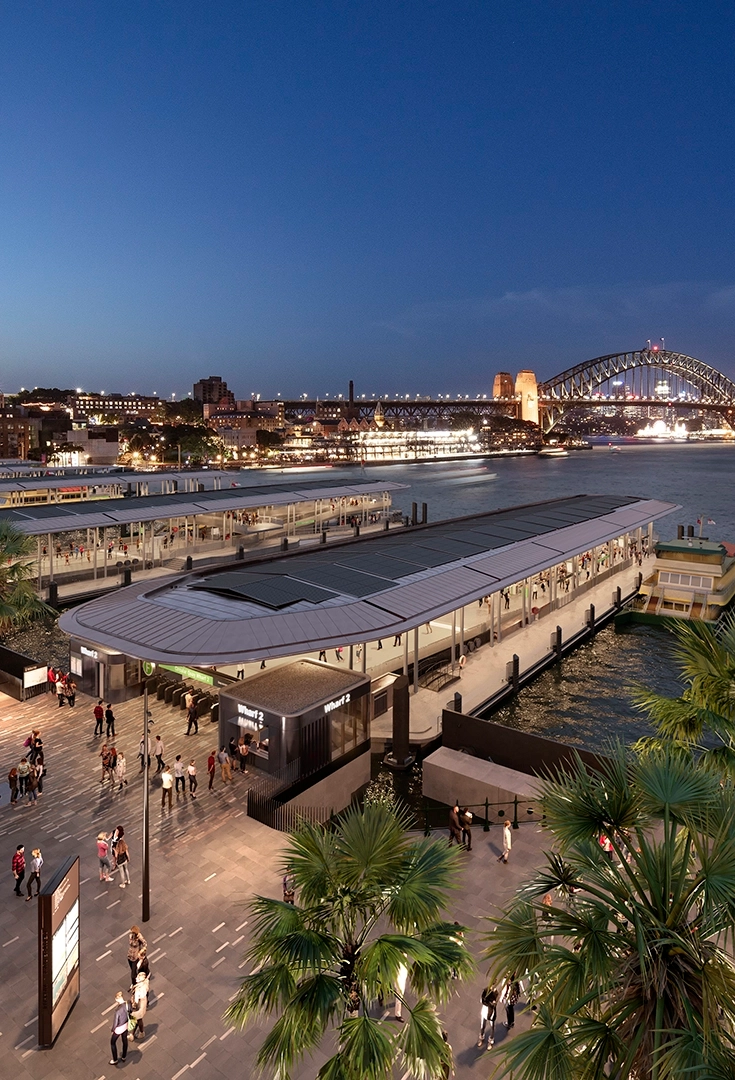
At the ferry wharf, six old wharves are replaced with new, simplified pontoons with a bigger footprint to meet capacity projections. The new pontoons offer sightlines to the Quay and CBD and integrate solar roofs to generate energy, while sensitive marine habitats are restored and revealed. The overall transport experience is easier, safer and more accessible for tourists and city workers alike.
A fitting gateway to the city
The Circular Quay renewal proposal resolves the precinct’s current challenges and celebrates the convergence of land and water. A series of distinctive, memorable and interconnected spaces integrate parks, retail, dining, arts and culture to invite gathering and create a unified sense of place. The increased amenity will support events throughout the year and deliver economic, cultural and environmental uplift.
The revitalisation reimagines Circular Quay as an outstanding destination befitting its status as Australia’s most iconic urban precinct.